



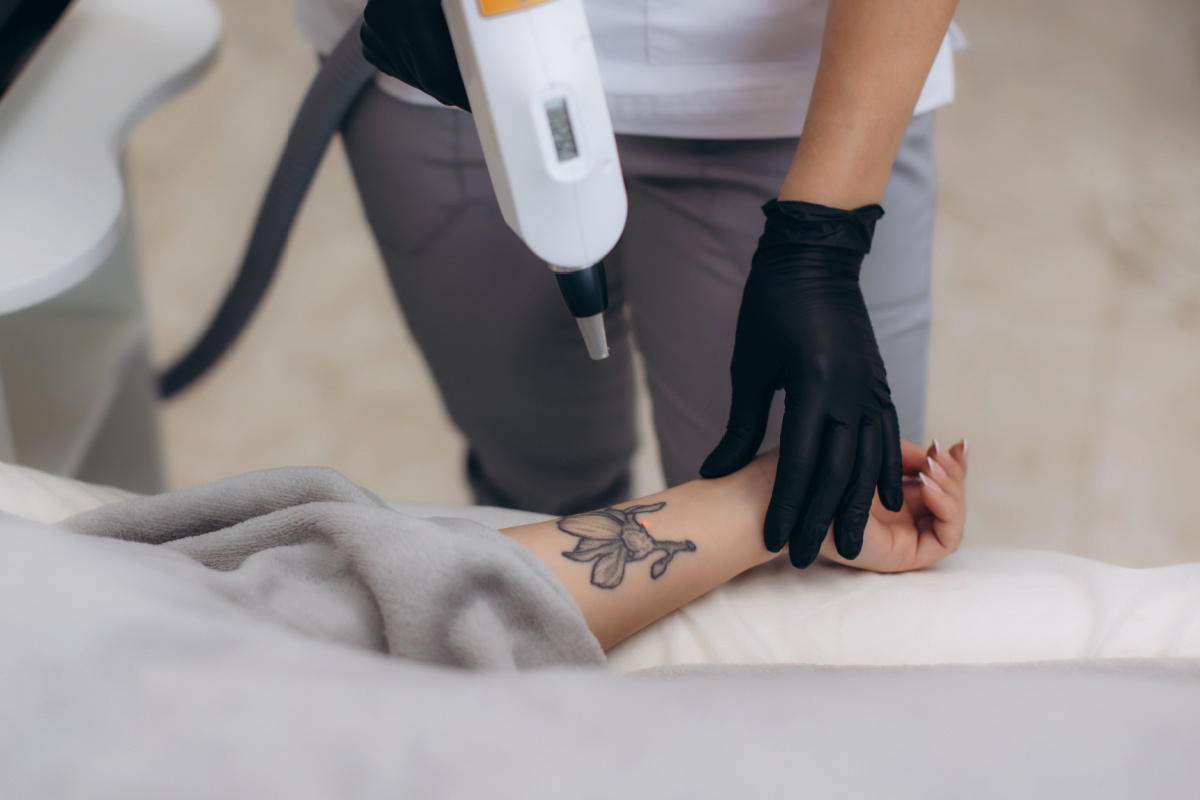
Plenty of people love a tattoo the day they get it… and then want it gone ten years later. Laser tattoo removal gives you a faster, more precise way to fade or fully clear a tattoo you’ve outgrown. Maningas Cosmetic Surgery now offers this treatment with PICOFY, a picosecond laser platform, as part of our non-surgical treatments at our Joplin med spa. Here’s what laser tattoo removal actually involves, what a session feels like, and how to tell if it’s the right fit for your ink.
How does laser tattoo removal work?
Laser tattoo removal uses focused light energy to break tattoo ink into fragments small enough for your body’s lymphatic system to clear away naturally. Maningas Cosmetic Surgery performs this treatment with PICOFY, a picosecond laser that fires pulses measured in trillionths of a second, much shorter than the nanosecond pulses older tattoo removal lasers rely on. That shorter pulse creates a photoacoustic effect, shattering ink instead of heating the surrounding tissue.
Are pico lasers better for tattoo removal?
A 2018 study in the Journal of the European Academy of Dermatology and Venereology compared picosecond and nanosecond lasers head-to-head on the same tattoos and found picosecond treatment produced significantly better ink clearance. That finding is why many practices have moved from older Q-switched lasers to picosecond platforms for tattoos that didn’t fully respond to earlier technology.
The photoacoustic effect also changes how your skin recovers after treatment. Older nanosecond lasers rely more heavily on heat to break down ink, which raises the risk of scarring and pigment changes. A picosecond laser shatters ink mechanically rather than cooking the surrounding tissue, which is part of why it can treat a broader range of skin types with less risk to the skin around the tattoo.
Does laser tattoo removal hurt?
Most patients describe the treatments as a series of quick, warm snaps against the skin. Because picosecond lasers cover the treatment area faster than older nanosecond lasers, sessions often run shorter overall. A numbing cream applied beforehand keeps discomfort manageable for the large majority of patients, and some redness, swelling, and mild sensitivity are normal for the first day or two afterward.
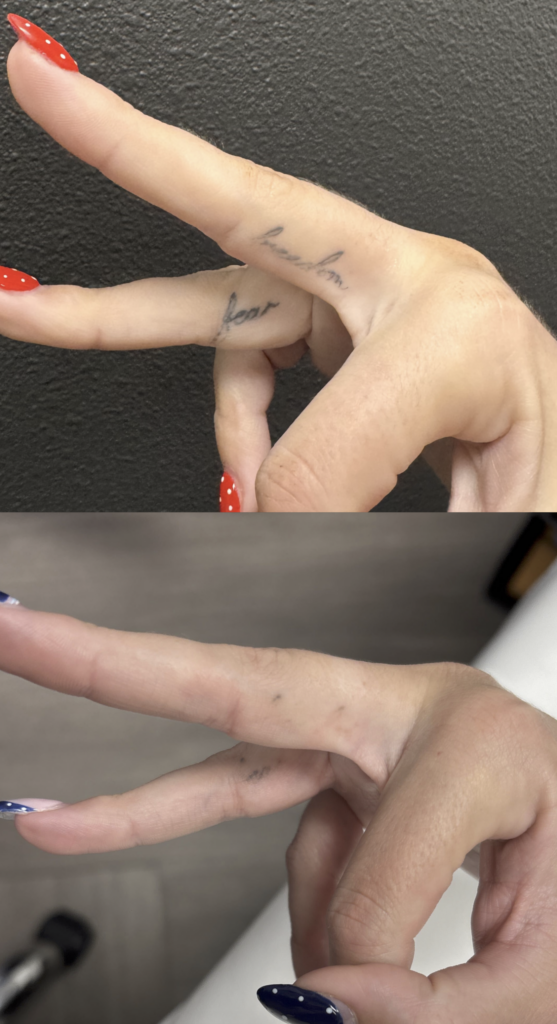
Before and after laser tattoo removal at Maningas Cosmetic Surgery
How many sessions does it take to remove tattoos with laser?
Most tattoos need a series of sessions rather than a single visit, and your laser technician will map out a specific plan based on your tattoo’s size, ink density, and color palette during your consultation. Simpler, older black-ink tattoos generally clear in fewer sessions than dense, colorful, or professionally layered pieces. Your provider will give you a realistic session estimate once they’ve examined your tattoo in person, since no two pieces respond exactly the same way.
How long should I wait between laser tattoo removal sessions?
Sessions are spaced six to eight weeks apart. That gap gives your lymphatic system time to clear out the shattered ink particles from the previous treatment before the next round of laser energy targets what’s left. Booking sessions too close together doesn’t speed up results. It just increases the risk of irritation without giving your body the time it needs to do its job.
In the past people had to live with their tattoos forever, but today laser tattoo removal is a convenient, accessible option.
Can every tattoo ink color be removed?
Our PICOFY laser uses two wavelengths, 1064nm and 532nm, to treat a range of tattoo ink colors rather than just one shade of ink. Black and dark blue ink tend to respond fastest and most completely, since those pigments absorb laser energy most efficiently. Lighter colors like yellow, white, and light green typically take more sessions and may not clear as completely, which your laser technician will walk you through based on your specific tattoo.
Am I a good candidate for laser tattoo removal?
Most patients who want to fade or fully remove a tattoo are good candidates, but a consultation is the only way to confirm candidacy for your specific skin and ink. Good candidates typically include:
- Patients in overall good health with no active skin infections in the treatment area
- Patients seeking full removal, significant fading, or prep work before a cover-up tattoo
- Patients who understand results build gradually across multiple sessions, not overnight
- Patients who can commit to sun protection on the treatment area between sessions
Certain conditions, medications, and recent sun exposure on the treatment area can affect timing or safety, so your laser technician will review your health history before your first session.
Will laser tattoo removal leave any mark or scars on my skin?
Scarring after laser tattoo removal is uncommon when aftercare instructions are followed, since the picosecond pulse targets ink rather than heating the surrounding skin. Some patients notice temporary lightening or darkening of the treated skin, which usually fades as the area heals. Patients with a history of keloid scarring, active skin conditions in the treatment area, or certain skin tones should discuss their history with their laser technician before starting treatment, since individual healing patterns can affect the plan.
How do I care for my skin after a laser tattoo removal treatment?
Expect the treated area to look similar to a mild sunburn for a few days: some redness, slight swelling, and possibly light blistering or scabbing as the skin heals. Keeping the area clean, moisturized, and out of direct sun protects your results and helps prevent complications. Most patients return to normal daily activities the same day, though your laser technician may recommend avoiding strenuous exercise or swimming for a short window after treatment.
Getting Started with Laser Tattoo Removal at Maningas Cosmetic Surgery
Dr. Talon Maningas, a triple board-certified cosmetic surgeon, oversees the non-surgical treatment program at Maningas Cosmetic Surgery, where trained laser technicians perform every session with PICOFY using a plan built around your tattoo and skin.
Your first visit includes a close look at your tattoo’s size, ink colors, and depth, along with a review of your skin type and health history. Your laser technician uses that information to estimate a realistic session count and timeline, rather than quoting a number before ever seeing your tattoo in person. You’ll leave with a specific plan instead of a generic estimate, along with pricing based on your particular tattoo.
Schedule a laser tattoo removal consultation with Maningas Cosmetic Surgery in Joplin by calling 417-437-0303 or requesting an appointment online.
References
Lorgeou A, Perrillat Y, Gral N, Lagrange S, Lacour JP, Passeron T. “Comparison of two picosecond lasers to a nanosecond laser for treating tattoos: a prospective randomized study on 49 patients.” J Eur Acad Dermatol Venereol. 2018 Feb;32(2):265-270. doi: 10.1111/jdv.14492. PMID: 28758261.